Self-Service Release Build
Releases your teams run themselves. The second half of the fee is due when they do.
We automate the release flows that cost you the most, end to end. Any engineer on the team can start a release and roll it back without waiting on another team, with the approvals your policy requires built into the pipeline.
Who it's for
Teams that know where their release time goes, from a Release Bottleneck Review or their own measurements, and want that time back.
What changes
How it works
- Acceptance criteria first: from your Review, or from the Build's first week. You sign them before the build work starts.
- Early on, one release runs end to end through the new pipeline in test.
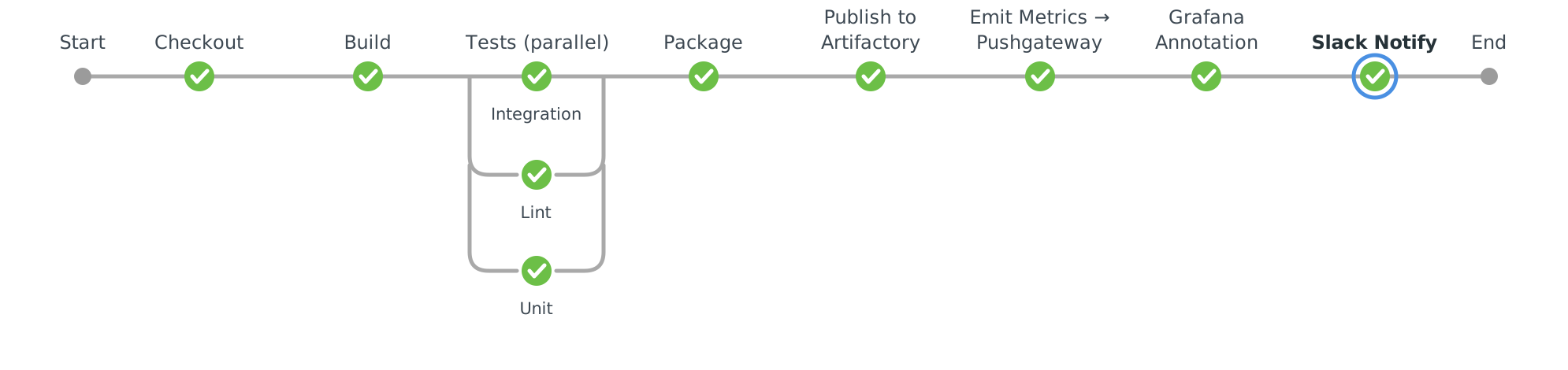
- Flow by flow: every manual step automated, checks after each stage, tested rollback, status messages.
- Each team releases once with us, then on its own.
- Acceptance: three production releases in a row meet the criteria. Then handover and 30 days of support.
Plan on 4 to 8 weeks.
What it takes from your team
Example acceptance criteria
Price
From
€14,500
ex VAT
The price is built from the scope, so you can check every line. A release flow is one pipeline and deploy path; services that share it count as one flow, up to 10 services.
| Line | Benelux | North America |
|---|---|---|
| Base: design, acceptance tests, handover, 30 days of support | EUR 9,000 | USD 10,500 |
| Per release flow | EUR 5,500 | USD 6,500 |
| Per extra team onboarded | EUR 1,500 | USD 1,750 |
| Moving to another CI tool | +25% | +25% |
| No CI yet | +20% | +20% |
| Hybrid, on-prem or edge systems | +20% | +20% |
| Add-on: release from Slack or Teams (start, approve and roll back from chat) | EUR 3,500 | USD 4,000 |
Percentages apply to base, flows and teams, and don't stack on each other. Every Build includes status messages in chat or the ticket, and a change record for every production release: approval, author, commit and deploy. It also includes signed artifacts, a software bill of materials for every release, and an audit export.
Guarantee
Paid on green: a Review fee comes off the price first. The rest is paid half at signature and half when every acceptance criterion passes. If a criterion fails, we keep working at no extra cost until it passes.
No lock-in
Everything is built in your repositories and accounts, in tools you already run. No ES.nl software and no license. You own what is built as it is committed to your repositories. Your team maintains it with the runbook and the training, or hands the upkeep to Release Care.
Results from earlier work


Questions
Yes. The Build's first week measures your release flows and sets the acceptance criteria. You sign them before the build work starts.
Pipelines are built in the tool you run. Where a tool is outside our hands-on stack, a partner engineer who uses it daily builds that flow, and we review every change.
We design it, build the core and review every change. Partner engineers work under the same NDA.
The plan moves with them, day for day. What we need and by when is written into the contract.
Talk to the engineer
"As an engineer, I know the challenges in software delivery from both business and technical views."
