In most industries, a botched deploy costs revenue. In healthcare it can cost a patient, a regulator's attention, and a breach disclosure that runs into eight figures. That asymmetry should shape every architectural and process decision an engineering organisation makes here, yet a lot of healthcare software is still built as if reliability and security were features to add later rather than constraints to design around from the first commit. This piece is for the people who own that decision: directors, engineering managers and senior engineers running regulated, high-scale teams who have heard enough about "digital transformation" and want to know where the actual engineering leverage is.
Security is the central constraint, not a compliance checkbox
Start with the number that reframes everything else. According to IBM's 2025 Cost of a Data Breach Report, the average U.S. healthcare data breach cost $7.42 million in 2025. That figure fell from $9.36 million the year before, but healthcare has still been the costliest industry for breaches for fourteen consecutive years. No other sector is close. When the expected cost of a single failure is this high, security stops being a workstream the security team owns and becomes a property of the delivery pipeline itself.
The detection numbers make the argument even sharper. Healthcare breaches take the longest of any industry to identify and contain, averaging 279 days, roughly five weeks longer than the global average. A 279-day mean-time-to-detect is not a security problem in isolation; it is an observability problem. It means telemetry, audit logging, anomaly detection and incident response were not built into the system as it shipped. The fix is unglamorous and entirely within engineering's control: structured logging on every protected-health-information access path, automated alerting tied to runbooks, and incident response rehearsed rather than improvised. Secure-by-design pipelines, where secrets management, dependency scanning, SBOM generation and least-privilege deploy credentials are part of the build rather than a quarterly audit, are what move that 279-day number down. Bolt-on security does not.
The AI wave is real, but it raises the bar on delivery discipline
The demand signal is unambiguous. In McKinsey's Q4 2024 survey of around 150 healthcare leaders, 85% were already exploring or adopting generative AI, with more organisations in implementation than in proof-of-concept. Independent reporting on the same survey confirmed that breakdown and added detail on how the work gets done. This is no longer a question of whether AI shows up in clinical and operational workflows; it is a question of who builds it reliably enough to deploy near patient care.
Here is the part most roadmaps skip. DORA's 2024 State of DevOps Report found that AI adoption raises individual developer productivity, flow and job satisfaction, but is correlated with decreased software delivery throughput and stability. The report's modelling estimated that a 25% increase in AI adoption was associated with roughly a 1.5% drop in delivery throughput and a 7.2% drop in stability. Internal developer platforms showed a similar pattern: productivity gains that can come at the cost of change stability if the guardrails are weak. In a domain where instability has clinical consequences, that trade-off is not academic. It means AI-assisted development and platform investments have to be paired with the boring fundamentals: trunk-based development, fast and trustworthy CI, progressive delivery with automated rollback, and code review that does not rubber-stamp generated code. AI accelerates output; it does not absolve you of verifying that output before it touches a system of record.

Build, buy, or partner is itself an engineering decision
The same survey data tells you how the market intends to deliver all this. Of the healthcare organisations adopting generative AI, 61% plan to do it through third-party partnerships, against 20% building in-house and 19% buying off-the-shelf. Among those partnering, independent reporting noted that 58% lean on existing IT vendors and 46% on cloud hyperscalers for data-management expertise.
For an engineering leader, the takeaway is not "outsource it." It is that the build/buy/partner choice is an architecture decision with long-lived consequences, and it should be made on engineering grounds rather than procurement convenience. Partnering with a hyperscaler or specialist gets you data infrastructure and model tooling quickly, but it pushes responsibility for data residency, access boundaries, audit trails and exit strategy onto your integration layer. The teams that come out of this well treat partners as components behind clean, well-tested interfaces, retain ownership of their data model and their compliance posture, and avoid the trap of a vendor relationship that quietly becomes load-bearing infrastructure nobody can swap out.
Where the directional themes actually cash out
Remote patient monitoring, electronic health records, data-driven care and operational automation are still the right directions; they were the right directions in 2023 and the demand has only hardened. But each one is a reliability and scale problem dressed as a product feature. Remote monitoring means ingesting streaming device telemetry without dropping events that trigger an intervention. EHR integration means correctness under concurrent writes and a schema that survives a decade of regulatory change. Data-driven care means a pipeline whose lineage you can prove to an auditor. Operational automation means workflows that fail safe, because a scheduling system that silently double-books is worse than one that asks a human.
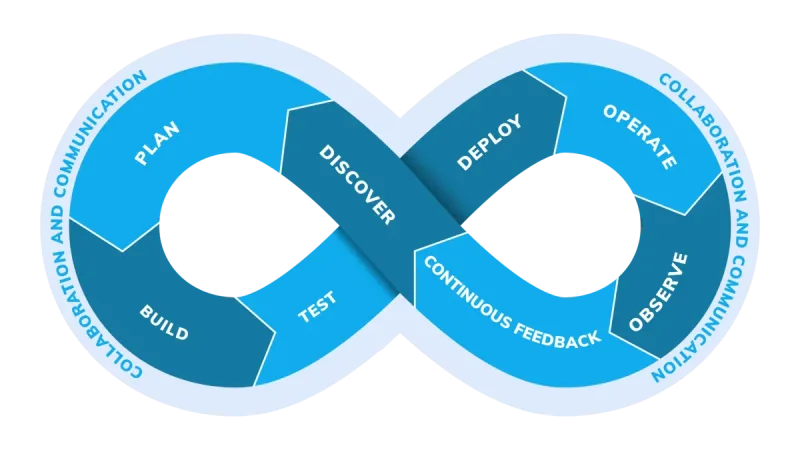
What ties these together is not a product category; it is engineering practice. DevOps, cloud and platform engineering are the disciplines that turn directional ambition into systems that are observable, recoverable, secure and scalable under real load. Infrastructure as code makes environments reproducible and auditable. CI/CD with automated security and compliance gates turns the 279-day detection window into something you actively shrink. Platform engineering gives clinical product teams paved paths so they ship features without each reinventing secrets handling and deployment safety. None of this is novel. In healthcare it is simply non-optional, because the cost of getting it wrong is measured in millions of dollars and, occasionally, in outcomes that do not show up on a dashboard at all.
If there is one shift to take from the last two years of evidence, it is this: the conversation about software in healthcare has moved past whether technology helps. It does. The open question is whether your delivery practice is strong enough to ship it safely. Teams that invest in secure-by-design pipelines, real observability and disciplined delivery will capture the AI and data opportunity. Teams that treat those as afterthoughts will keep contributing to the breach statistics. Keeping up with developments in software engineering and delivery is part of staying on the right side of that line, but the durable advantage is built in the pipeline, not the press cycle.
Sources
- Average Cost of a Healthcare Data Breach Falls to $7.42 Million - The HIPAA Journal (reporting IBM Cost of a Data Breach Report 2025), 30 July 2025
- Accelerate State of DevOps Report 2024 - DORA / Google Cloud, 22 October 2024
- Generative AI in healthcare: Adoption trends and what's next - McKinsey & Company, 13 February 2025
- Survey: Gen AI in healthcare gains momentum across sectors - xtelligent Healthtech Analytics / TechTarget, 4 April 2025