Most guides to hiring a healthcare software development company read like a checklist anyone could write: "look for experience," "check reviews," "consider scalability." If you are an engineering director or staff engineer evaluating a partner for a regulated, high-volume clinical system, that advice is worse than useless - it gives you false confidence while skipping the criteria that actually predict whether the relationship ends in a shipped product or a breach notification. This is the version I would hand to a VP before a vendor shortlist: what to measure, what to demand in writing, and where most procurement processes go wrong.
The stakes are not abstract. Healthcare has been the most expensive industry for data breaches for 14 consecutive years, averaging $9.77M per breach in 2024 against an all-industry global average of $4.88M. Roughly $2.8M of that average is lost business and post-breach response - the part that lands on your roadmap and your reputation, not the attacker's. So the first reframe: you are not buying features. You are buying down the probability and blast radius of a security and compliance failure. Everything below follows from that.

Treat security as architecture, not a line item
A vendor that lists "HIPAA compliant" on a slide and moves on has already told you something. Ask where security lives in their design process. In healthcare the slowest, most damaging breach vectors are not exotic zero-days - they are stolen or compromised credentials (292 days average to identify and contain), phishing (261 days) and social engineering (257 days). Those numbers are an indictment of identity and access controls, not firewalls.
So press on specifics that bolt-on security can't fake:
- Identity and access management as a first-class design concern: least-privilege by default, short-lived credentials, no shared service accounts, full audit trails on who accessed which patient record and when.
- Secrets management that is centralised and rotated automatically. If they are storing connection strings in config files or CI variables, that is a finding.
- Secure-by-design practices baked into the SDLC: threat modelling at design time, dependency and SAST scanning in the pipeline, and a documented process for triaging and patching CVEs - not an annual pen test that gets filed and forgotten.
A mature partner will walk you through these without flinching, because they already do them. A weak one will reassure you that they "take security very seriously." Believe the artefacts, not the adjectives.
The compliance bar moved: HIPAA is no longer the ceiling
If you are a Dutch or EU buyer, scoping your vendor to HIPAA is scoping to the wrong jurisdiction and the wrong decade. The European Health Data Space (EHDS) Regulation (EU) 2025/327 entered into force on 26 March 2025. It makes interoperability, security, safety and privacy certification mandatory for all electronic health record systems before they can be placed on the EU market, with secondary-use provisions phasing in through 2029.
That changes the conversation from "future-proofing" to concrete, dated obligations. The original generic advice to "consider scalability and support" should be reframed as regulatory-grade data governance: can the vendor demonstrate harmonised EU interoperability (the EEHRxF exchange format), secure processing environments for any secondary data use, audit logging that satisfies a regulator, and the patient access and control rights EHDS strengthens? Ask whether they have actually read the regulation and mapped their architecture to it, or whether EHDS is a phrase they picked up in this meeting. The phased deadlines are public; a serious partner already has a position on them.
Benchmark delivery maturity with numbers, not anecdotes
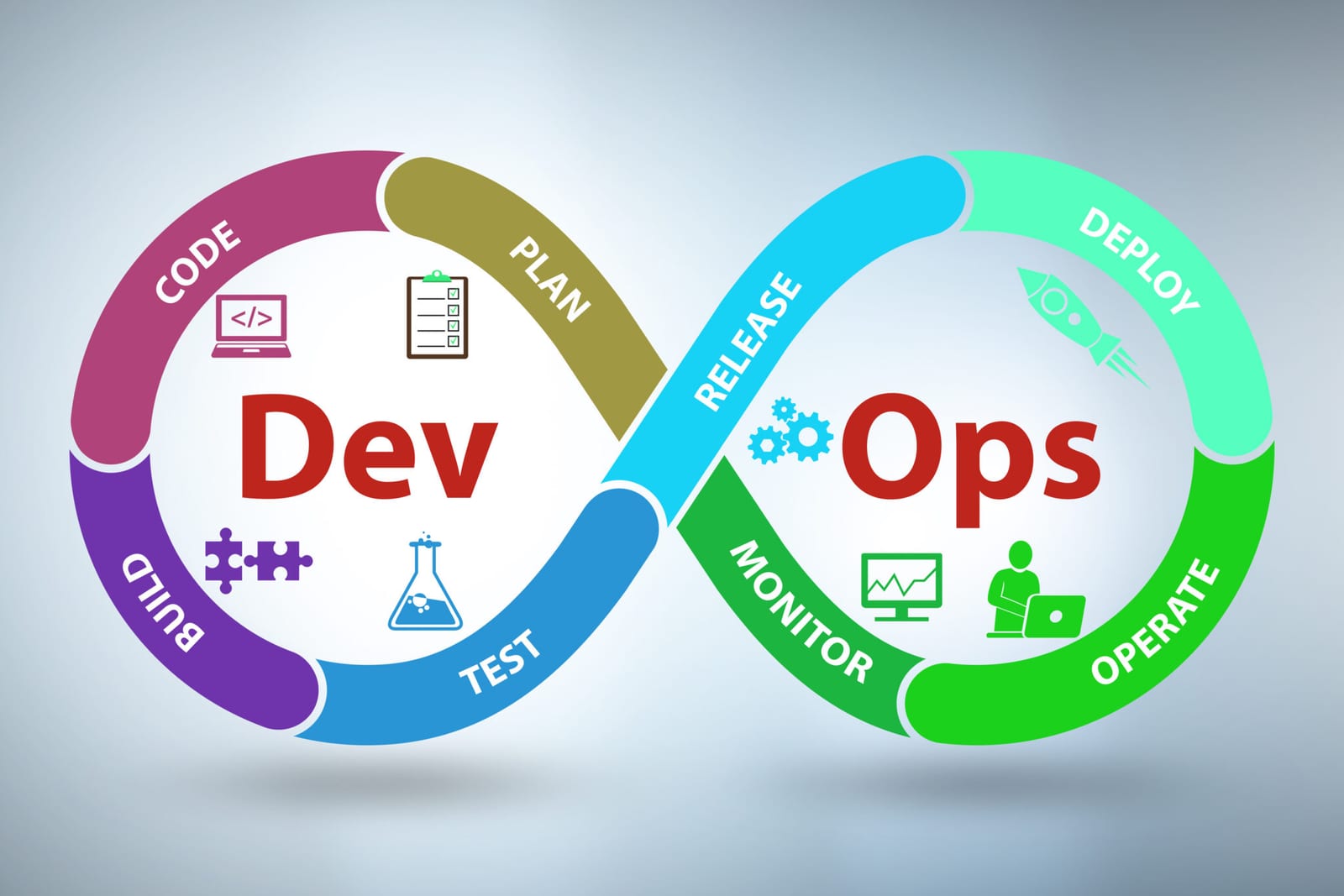
"Proven track record" is unfalsifiable. Engineering maturity, by contrast, is measurable - and you should make the vendor produce the measurements. The 2024 DORA Accelerate State of DevOps Report (39,000+ respondents) defines elite delivery performance precisely: deploy on demand, lead time for changes under a day, change-failure rate under 5%, and recovery from incidents in under an hour. Only 19% of teams clear that bar. In a domain where a failed deploy can mean a clinician can't pull up a medication list, those four metrics are a direct proxy for the operational risk you are taking on.
Ask every shortlisted vendor for their DORA metrics on a comparable, regulated project. Three things to watch for:
- Refusal or vagueness ("we don't really track that") tells you they are not measuring their own reliability, which means they cannot improve it and you cannot verify it.
- Suspiciously perfect numbers with no incident history. Mature teams have postmortems and a mean-time-to-recovery story. Ask to see how they handled a recent production incident.
- Change-failure rate over recovery time. In healthcare, a sub-hour recovery on a contained failure beats a low deploy frequency that hides risk in big-bang releases.
Probe how they use AI - because in 2024 it cut both ways
Every vendor now claims AI makes them faster. The DORA data complicates that claim in a way worth raising directly. A 25% increase in AI adoption correlated with a 1.5% drop in delivery throughput and a 7.2% drop in delivery stability, even as it improved documentation (+7.5%) and code quality (+3.4%). The same report found platform engineering boosts productivity but causes a temporary performance dip before maturity.
The takeaway is not "avoid AI." It is that unmanaged AI use erodes exactly the delivery stability regulated healthcare systems depend on. A strong partner pairs AI assistance with disciplined human review, strong platform engineering, and the test and pipeline guardrails that catch what a model gets confidently wrong. Ask how AI-generated code is reviewed before it touches a system that handles patient data. If the answer is "the same as any other code," good - that is the right answer, and you should confirm the "any other code" path is itself rigorous.
What a defensible shortlist looks like
By the time you commit, you should be able to point at evidence, not impressions. Define your requirements as a clinical workflow and data-flow model, not a feature wishlist - that exposes where PHI moves and where the compliance and audit obligations actually bite. Then weight your scoring toward what the cost data says matters: security architecture and identity controls, demonstrable EHDS and interoperability readiness, DORA-grade delivery metrics on comparable work, and a sober, governed approach to AI. Portfolios and case studies are still useful, but read them for security and compliance maturity, not for visual polish.
Most vendors will pass the generic checklist. Far fewer will produce their change-failure rate, walk you through their secrets rotation, or show you their EHDS mapping. That gap is the entire point of doing this properly - it is where the $9.77M downside lives, and it is the only part of the evaluation a competitor can't copy off a brochure.
At Expeditious Software we build healthcare systems to this bar - secure-by-design, measured against DORA, and architected for EU regulatory requirements rather than retrofitted to them. If you want a partner who will hand you the metrics before you ask, get in touch.
Sources
- Average Cost of a Data Breach Rises to $4.88M; Falls to $9.77M in Healthcare - The HIPAA Journal (reporting on IBM / Ponemon Institute Cost of a Data Breach Report 2024)
- Cost of a data breach: The healthcare industry - IBM (Cost of a Data Breach Report 2024, conducted by Ponemon Institute)
- The European Health Data Space - What EU Health Care Providers and Data Holders Need To Know - Skadden, Arps, Slate, Meagher & Flom LLP
- Announcing the 2024 DORA report (Accelerate State of DevOps Report 2024) - Google Cloud / DORA