If you are still framing the infrastructure conversation as a single architectural choice - on-premise or cloud, pick one and commit - you are answering a question your peers stopped asking around 2023. The differences that the old comparison tables list (capital vs. operating cost, who controls the data, how fast you can scale, who carries the maintenance burden) are all still real. What has changed is the decision they feed into. For any serious engineering organization in 2026, this is no longer a venue selection made once at the platform level. It is a per-workload placement decision, justified individually on cost, data sensitivity, performance, and operational fit, and revisited as those variables move. This piece walks the four classic differences with that reframing, and grounds each in what the current data actually shows rather than the marketing version of it.
Cost: the pay-as-you-go story has not aged well
The conventional pitch is that on-premise demands heavy upfront capital while cloud's consumption model is inherently cheaper and more efficient. The first half is true. The second half is the part that has quietly become the biggest operational headache in the industry. Flexera's 2025 State of the Cloud Report, drawn from more than 750 technical professionals and executives, found that 84% of organizations name managing cloud spend as their top cloud challenge, that organizations exceed their cloud budgets by 17% on average, and that roughly 27% of cloud spend is wasted. Cloud is not reliably cheaper. It is reliably easier to overspend on, because the same elasticity that lets you scale up at 3am also lets idle resources, oversized instances, and forgotten environments accrue charges with nobody in the approval loop.
The strategic correction is not "go back on-premise." It is to treat cost as something you engineer and govern, not something the billing model hands you. The same report shows 87% of organizations now rank cost efficiency and savings as their number-one metric, and a majority lean on FinOps practices and managed service providers to regain control. For an engineering director, the practical implication is concrete: cloud placement is defensible only when it comes with forecasting discipline, tagging and showback, rightsizing, and someone accountable for the run-rate. On-premise still wins on unit economics for steady, predictable, high-utilization workloads - the ones where you are paying cloud premium for elasticity you never actually use. Notably, even with all this scrutiny, cloud spend is still projected to grow 28% year over year, which tells you the answer is governance, not retreat.
Security and data control: this is where placement is least negotiable
The old comparison treats security as a wash - on-premise gives you direct control and full responsibility, cloud providers invest more in security infrastructure than you ever could. Both remain accurate, and for most workloads the major hyperscalers genuinely raise your baseline. But security is rarely the deciding variable anymore. Data control and sovereignty are. The question that actually drives placement is not "is the cloud secure" but "where is this specific dataset legally and contractually allowed to live, who can be compelled to hand it over, and can I prove residency to an auditor." For regulated data - payment records, health data, anything under sovereignty or sector-specific residency requirements - those answers can force a workload on-premise or into a specific jurisdiction regardless of how good the provider's encryption is.
This is exactly why a binary platform-wide choice fails: a single organization will legitimately run customer-facing stateless services in public cloud while keeping a regulated system of record on-premise or in a sovereign region. The differentiator at the workload level is data sensitivity and the cost of proving control, not a global verdict on whether "the cloud" is safe.
Scalability: the value is in the operating model, not the migration
Cloud's scalability advantage is real and largely uncontested - you can add and remove capacity in minutes instead of procurement cycles. The trap is assuming that the benefit arrives the moment your workload lands in a cloud account. It does not. DORA's 2024 Accelerate State of DevOps Report is blunt about this: leveraging flexible cloud infrastructure directly increases organizational performance, but simply migrating to the cloud without adopting its inherent flexibility "can be more harmful than staying in a traditional data center."
That sentence should reframe how you justify a migration. Lift-and-shift - taking a statically provisioned, vertically scaled, manually operated application and running the identical thing on rented hardware - keeps every constraint of on-premise and adds a metered bill on top. You get the cost profile of cloud with the rigidity of a data center. The scalability difference only becomes an advantage when the workload is re-architected to use it: horizontal autoscaling, infrastructure as code, decoupled state, and elastic capacity that actually contracts when demand drops. If a workload cannot or will not adopt that operating model - because it is a legacy monolith, a licensing-bound database, or a steady batch job - then "cloud is more scalable" is true in the abstract and irrelevant in practice for that workload. That is a strong signal to leave it on-premise.
Maintenance: the burden moves, it does not disappear
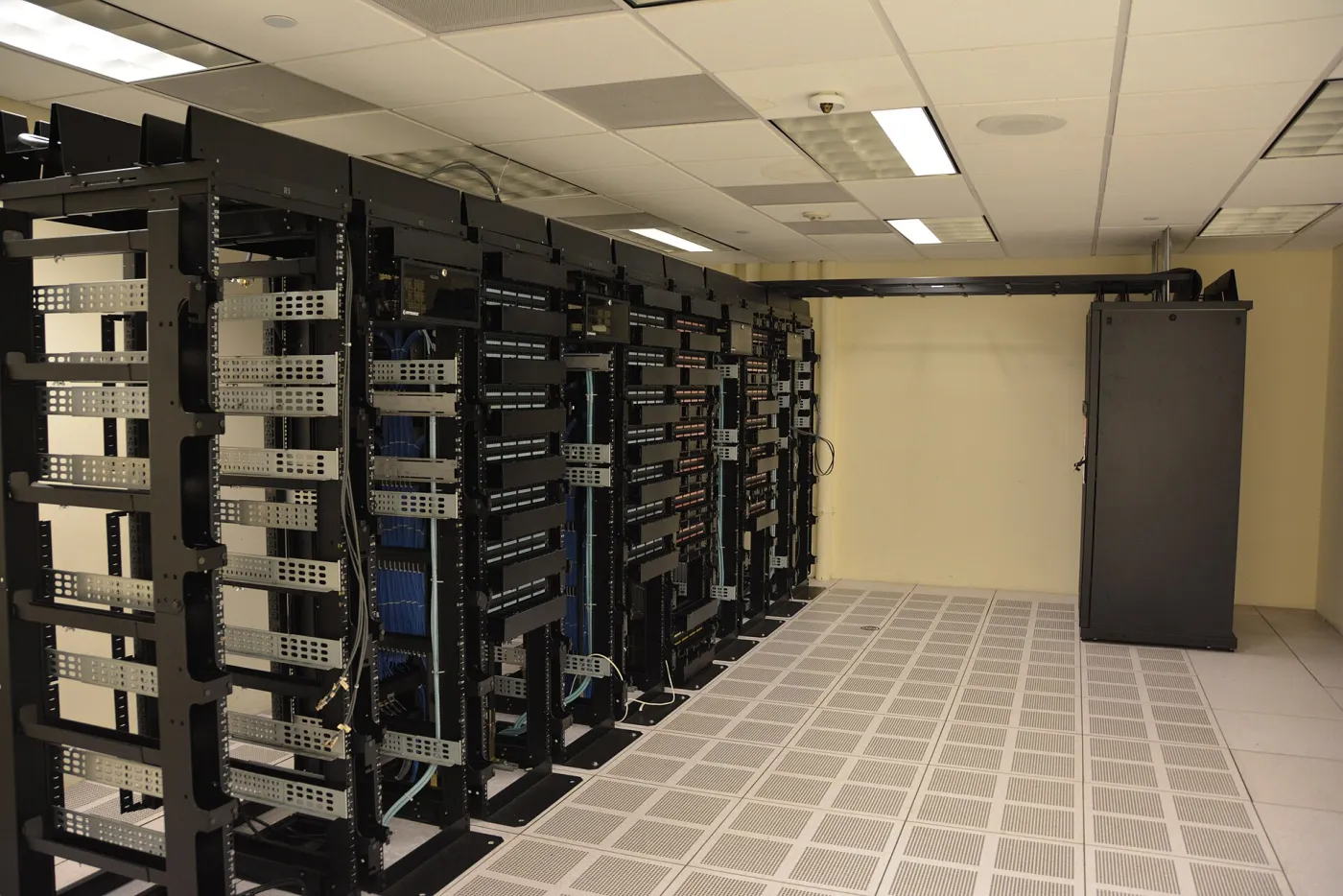
On-premise means you own the full stack: hardware, patching, capacity, the lot. Cloud shifts infrastructure maintenance to the provider, which genuinely frees teams from a class of undifferentiated work. But the framing that cloud lets you "focus on core competencies" oversells it. The maintenance burden changes shape rather than vanishing. You trade hardware lifecycle and physical capacity planning for managing IAM sprawl, networking, service limits, version deprecations on managed services, and - as the cost section made clear - continuous spend governance. Teams that migrate expecting maintenance to drop, then staff accordingly, tend to discover the cloud operating model needs at least as much engineering discipline as the data center did, just aimed at different problems.
The honest answer: deliberate hybrid, justified per workload
The market has already converged on this. IDC's mid-2024 research found that around 80% of organizations expected some repatriation of compute and storage within 12 months, yet fewer than 10% had moved entire workloads back on-premise. Read carefully, that is not a cloud exodus - it is selective correction. Foundry/CIO frames it precisely: this is a refinement of cloud strategy toward hybrid as the ideal, not a rejection of cloud. Flexera's data lands in the same place, with roughly 55% of workloads currently in public cloud and about 21% repatriated. The numbers describe an industry moving workloads back and forth at the margin to optimize value, not one declaring a winner.
So the four differences still hold - but they are inputs to a placement decision, not arguments for a side. The defensible position for a high-scale or regulated team is a deliberate hybrid model where each workload's home is justified on four axes:
- Cost and utilization. Steady, high-utilization workloads often pencil out cheaper on-premise; spiky or unpredictable demand is where cloud elasticity earns its premium - provided you have the FinOps discipline to stop the 27% waste.
- Data sensitivity and sovereignty. Residency, regulatory, and contractual constraints can pin a workload regardless of every other factor. Decide this first, because it is the least flexible input.
- Performance and architecture fit. Latency-sensitive or hardware-bound workloads, and anything that cannot adopt cloud-native elasticity, gain little from migration and may regress.
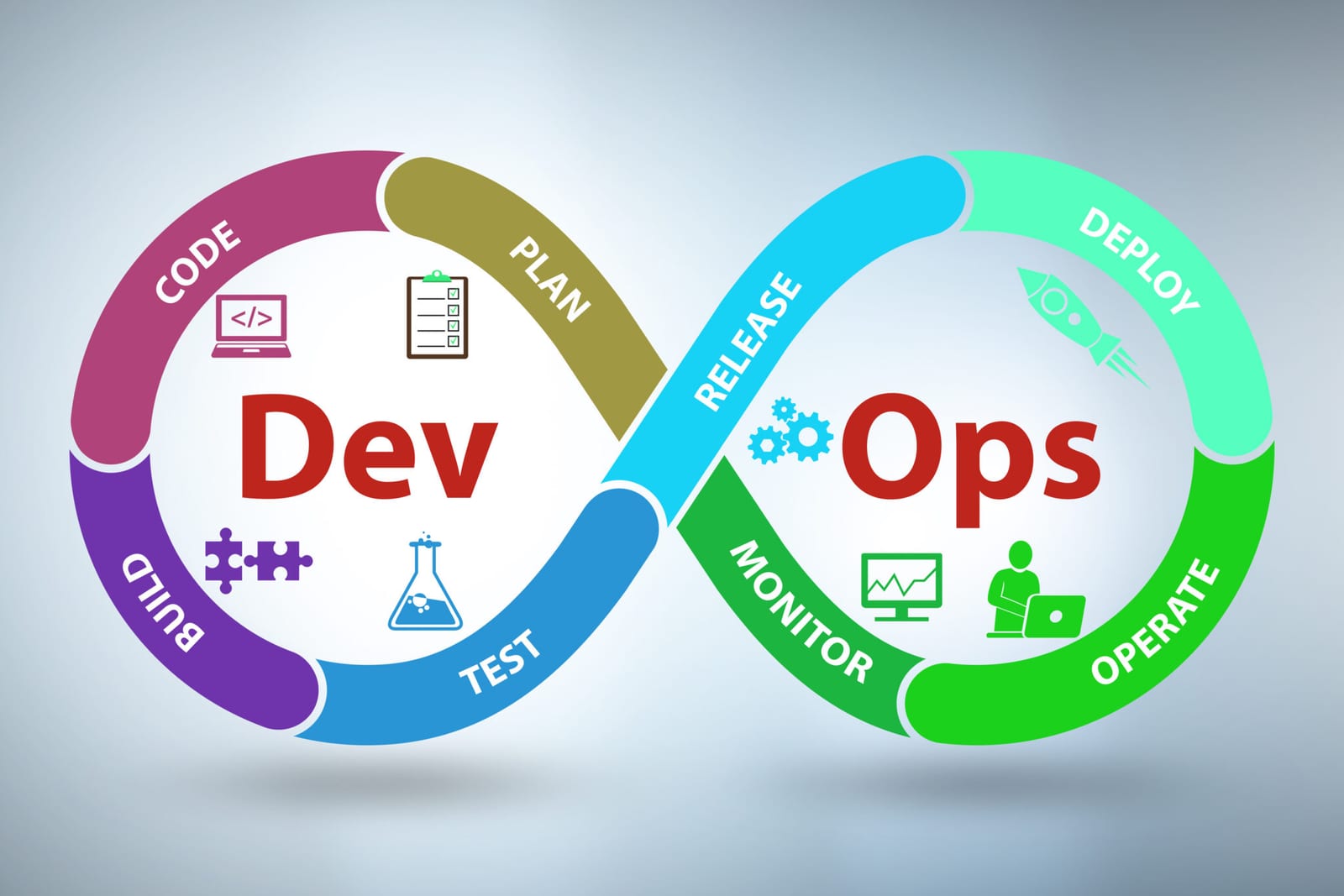
- Operating model. Per DORA, the workloads that benefit are the ones whose teams will actually use cloud flexibility. If you will not re-architect, you will not get the upside.
The teams getting this right are not the ones who "went to the cloud" or "stayed on-prem." They are the ones who stopped treating it as one decision, built the cost governance and architectural discipline to make each placement defensible, and accepted that the right answer for a given workload can change as cost, regulation, and demand shift. The differences are still worth understanding in detail. Just stop using them to pick a winner.
Sources
- New Flexera Report Finds that 84% of Organizations Struggle to Manage Cloud Spend - 2025 State of the Cloud Report (Flexera)
- The great repatriation? IT leaders reset cloud strategies to optimize value (CIO / Foundry)
- Assessing the Scale of Workload Repatriation: Insights from IDC's Server and Storage Workloads Surveys, 1H23 and 2H23 (IDC)
- Accelerate State of DevOps Report 2024 (DORA / Google Cloud)