
Most arguments for DevOps automation read like a vendor brochure: faster, better, cheaper, pick all three. If you run delivery at scale or under a regulator, you have learned to distrust that framing. The useful question is not whether automation helps but which mechanism produces the benefit, and what it costs you when the discipline underneath it is missing. This piece keeps the six classic benefits but grounds each one in what a decade of DORA research and current industry data actually show. The headline you should take away first: speed and stability are not a trade-off, and automation is the prerequisite for getting value from AI rather than a competing initiative.
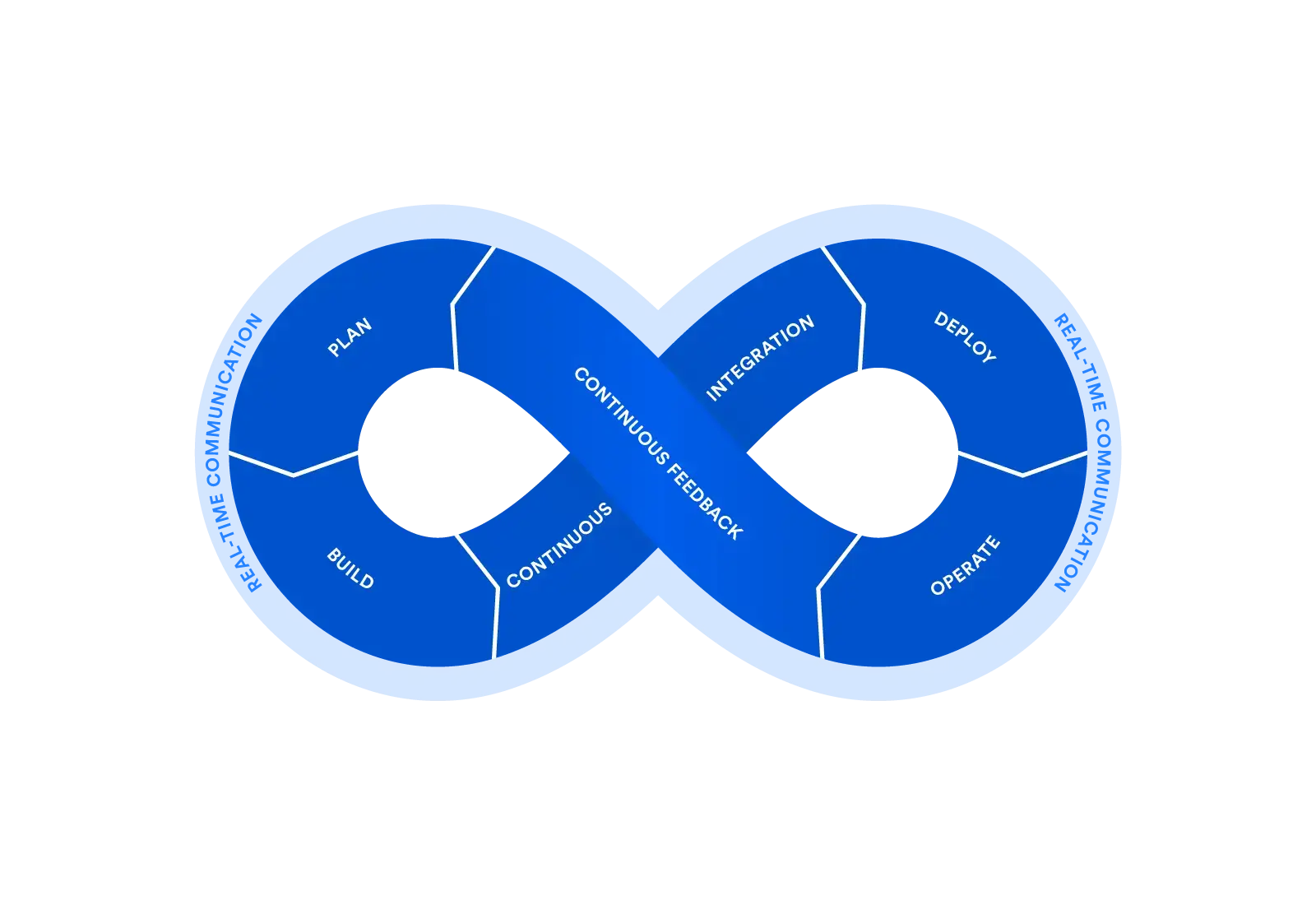
1. Increased efficiency, because manual steps force large batches
The efficiency win is real, but the causal chain matters. Automating test, build and deploy does not just save the wall-clock time of running those steps by hand. The deeper effect is on batch size. When a release requires manual gates, teams naturally batch more change into each release to amortise the human cost, and bigger changesets are riskier and slower to diagnose. The 2024 Accelerate State of DevOps Report, drawn from over 39,000 professionals, is explicit that manual steps in the pipeline drive larger batch sizes, which increase risk. Automating the path to production is what lets you keep batches small. This is also where the continuous integration investment earns its keep: not as a buzzword, but as the thing that makes a one-line change cheap enough to ship on its own.
2. Faster time-to-market without paying for it in incidents
The most durable finding in the DORA dataset, and the one worth repeating to a skeptical VP, is that throughput and stability are not in tension. A decade of data shows teams that automate their deployment pipeline deploy more often and fail less often and recover faster. The mechanism is the same small-batch dynamic from the previous section: frequent, small, automated releases are easier to verify, easier to roll back, and easier to reason about when something breaks. Speed and safety come from the same place.
This is the claim that separates a mature DevOps practice from a fast-and-fragile one. If your "faster time-to-market" arrives with a rising change failure rate, you have bought speed by skipping the automated verification that makes it safe, and DORA's evidence says that is a choice, not a law of physics.
3. Improved reliability through reproducible, observable releases
Reliability follows directly once deployment is automated and deterministic. A pipeline that builds, tests and deploys the same way every time removes the entire class of incidents caused by manual, environment-specific drift. Pair that with automated monitoring and alerting and you shorten time to restore, one of the four core DORA metrics (alongside lead time for changes, deployment frequency and change failure rate) that remain the standard for measuring delivery performance. If you are not yet instrumenting these four, our note on measuring DevOps success is the place to start, because you cannot defend a reliability claim you are not measuring.
4. Scalability comes from platform engineering, not just more servers
Scaling is where the conversation has genuinely moved since the original version of this article. Infrastructure as code, containers and orchestration still do the obvious work of letting you provision and scale on demand. But the structural shift is the rise of the internal developer platform. The 2025 DORA Report found that 90% of organisations have adopted at least one internal platform, and platform quality correlates directly with organisational outcomes.
For a high-scale or regulated team, this is the realistic path to scaling delivery without scaling headcount linearly: golden paths, paved pipelines and self-service environments that bake your compliance and security controls into the platform rather than relying on every team to re-implement them. One honest caveat from the 2024 data: platform adoption can temporarily reduce change stability as teams gain independence, so treat a platform as a product with its own guardrails, not a finished deliverable.
5. Improved collaboration as a property of shared tooling
Collaboration is the benefit most prone to fluff, so be concrete about what produces it. Teams do not collaborate better because someone declared a culture change; they collaborate better when they share the same pipeline, the same definition of done encoded as automated checks, and the same observable view of production. The platform is the collaboration surface. When the path to production is a paved road that development, operations and security all use, the silos the original DevOps movement set out to break down stop reforming around handoffs. If you are weighing how to structure these teams, our piece on what DevOps actually involves covers the operating-model side.
6. A foundation that lets you actually benefit from AI
This is the benefit that did not exist when this article was first written, and it reframes everything above. The 2025 DORA Report, surveying roughly 5,000 professionals, found that 90% now use AI for software development, up around 14 points year over year, and over 80% report productivity gains. But the central, hard-won finding is the one to internalise: AI amplifies the team it lands on rather than fixing it. Its benefits materialise only when automated testing, version control, fast feedback loops and CI/CD are already in place.
The two reports together tell a cautionary story worth quoting to anyone treating AI as a shortcut. In the 2024 data, a 25% rise in AI adoption tracked with a 1.5% drop in throughput and a 7.2% drop in stability, as analysed by InfoQ, because AI tends to inflate changeset size and bigger changesets are riskier. By 2025 the relationship with throughput and product performance turned positive, while the pressure on stability remained. The variable that explains the difference is the same one this entire article is about: small batches and automated testing are what keep AI-accelerated speed from becoming AI-accelerated risk. Notably, 39% of 2024 respondents still expressed low or no trust in AI-generated code, which is exactly why automated verification, not optimism, has to be the gate.
What this means for your roadmap
If you are deciding where to spend the next two quarters, the data points one way. Automate the path to production first, because it is the lever that keeps batches small and makes every later benefit possible. Instrument the four DORA metrics so reliability is a measurement rather than an assertion. Then invest in platform quality, because it is now the multiplier on both developer productivity and AI value. Done in that order, DevOps automation is not a cost centre or a fashion; it is the foundation everything else, including AI, is built on. This is the work we do with clients through our DevOps services, and for regulated teams in particular we have written separately on delivering under DORA.
Sources
- Announcing the 2025 DORA Report: State of AI-Assisted Software Development - Google Cloud (DORA Research Program), 2025
- Accelerate State of DevOps Report 2024 - Google Cloud (DORA Research Program), 2024
- 2024 Accelerate State of DevOps Report Shows Pros and Cons of AI - InfoQ, 2024